

Construction has always been one of the industries most closely associated with workplace injury risk, but the latest workers’ compensation data reveals an important shift. construction workers compensation claim costs 2026 frequency has been declining, yet the medical cost associated with serious lost-time claims has risen sharply.
According to the National Council on Compensation Insurance (NCCI), construction experienced approximately a 13% increase in lost-time medical claim severity between Accident Year 2023 and Accident Year 2024. Construction also had the highest lost-time medical claim severity among the major industries analyzed by NCCI.
That does not mean every construction workers’ compensation claim suddenly became 13% more expensive. Severity is an industry-level measure reflecting average medical losses associated with lost-time claims. Individual claims can vary dramatically depending on the injury, treatment, wages, disability duration, state rules, and whether complications arise during recovery.
The trend is nevertheless important for construction workers, contractors, insurers, and employers because it shows that fewer claims do not necessarily mean lower costs when injuries occur.
Readers unfamiliar with workplace injury benefits can begin with our Workers’ Compensation resource center. You may also want to review our article explaining workers’ compensation claim costs in 2026, which looks at broader medical and indemnity trends across industries.
Why Construction Workers’ Compensation Medical Severity Is Rising
NCCI’s 2026 State of the Line analysis provides an unusual combination of good and concerning news for construction. Construction is the largest industry in NCCI’s analysis by premium volume, accounting for approximately 27% of premium. Between Accident Year 2023 and Accident Year 2024, construction experienced the largest decline in claim frequency among the major industries, at nearly 7%.
At the same time, construction’s lost-time medical severity increased approximately 13%. Because construction represents such a large share of workers’ compensation premium and experienced such a substantial medical-severity increase, NCCI identified the industry as a major contributor to the overall increase in medical severity. construction workers compensation claim costs 2026.
Construction Stands Out From Other Industries
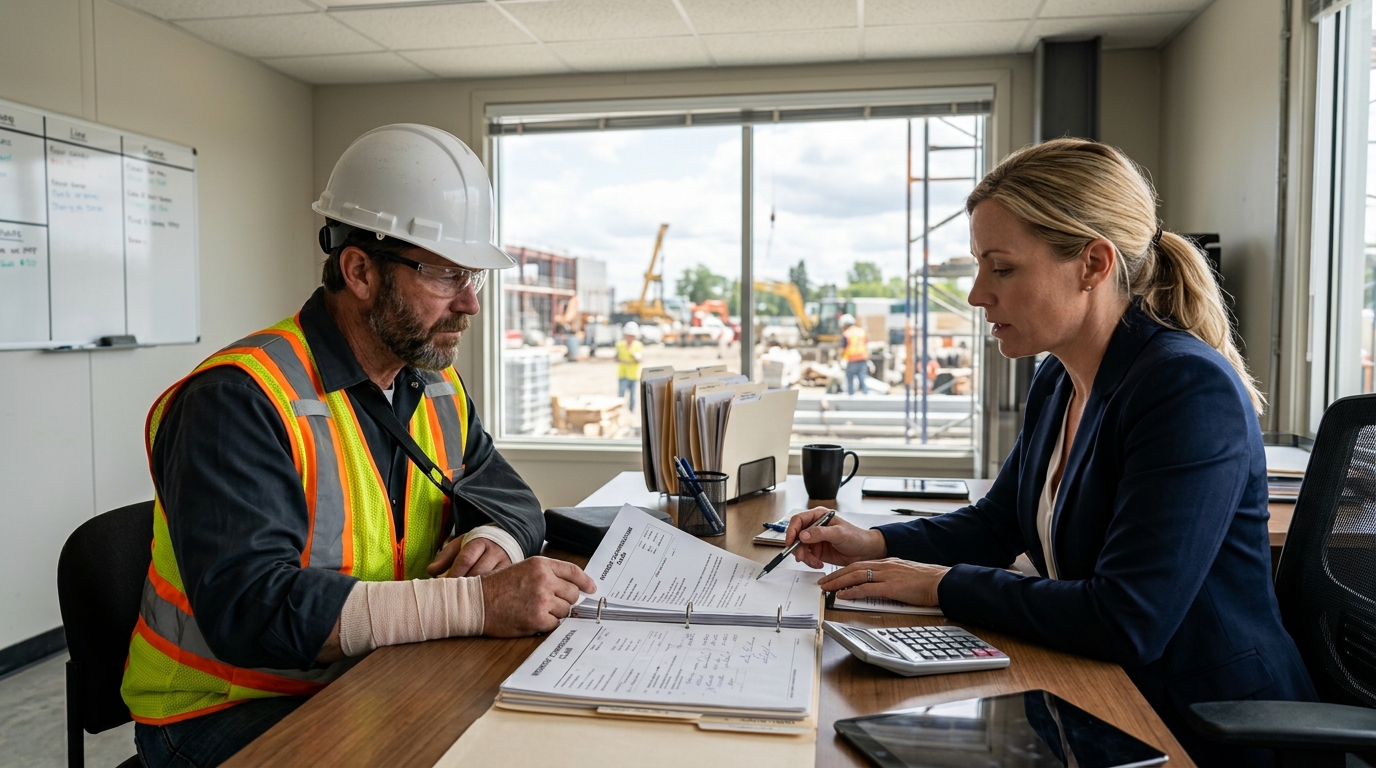
The construction trend becomes even more significant when the data is examined at the classification level. NCCI reported that all 10 of the largest construction classifications experienced reductions in claim frequency between Accident Years 2023 and 2024. Eight of those 10 classifications saw frequency decline more than the average across all industries.
However, more than half of the 10 largest construction classes experienced double-digit increases in medical claim severity. Three classes experienced decreases, showing that the trend was not identical across every type of construction work.
This illustrates why frequency and severity need to be analyzed separately. Better safety practices, training, technology, protective equipment, and risk management can help reduce the number of injuries. But the claims that do occur may still involve expensive medical treatment, extended rehabilitation, or long periods away from work.
Falls Can Produce Complex and Expensive Claims
Falls remain one of construction’s most significant hazards. Bureau of Labor Statistics data released in 2026 shows that 389 fatal construction injuries in 2024 involved falls, slips, and trips. Construction accounted for almost half of all fatal falls, slips, and trips in private industry during that year. construction workers compensation claim costs 2026.
Nonfatal falls also remain important. The annualized 2024 rate of construction falls, slips, and trips resulting in at least one day away from work was 30 cases per 10,000 full-time workers, compared with 22.6 across private industry overall. construction workers compensation claim costs 2026.
A serious fall can produce multiple injuries rather than one isolated condition. A worker may experience fractures, spinal injuries, head trauma, shoulder injuries, internal injuries, or damage requiring surgery. Those injuries may require emergency treatment, diagnostic imaging, hospitalization, surgery, physical therapy, medication, specialist appointments, and prolonged rehabilitation.
When a claim requires several types of treatment and an extended recovery period, medical severity can increase substantially.
Medical Utilization Can Matter as Much as Medical Prices
Rising workers’ compensation medical costs are not simply a story about inflation. NCCI’s broader 2026 medical-cost analysis found that overall medical cost per claim increased approximately 6% between 2023 and 2024. About four percentage points of that increase were associated with changes in utilization, while approximately two percentage points were attributed to price.
Inpatient utilization was particularly important. NCCI found that a higher share of claims involving inpatient stays contributed meaningfully to increasing medical costs.
This distinction matters in construction because serious injuries can require intensive treatment. A claim involving hospitalization, surgery, rehabilitation, and follow-up specialists will naturally generate a very different medical-cost profile from a minor injury treated through a few outpatient visits.
Construction work also involves substantial physical demands. Returning to a physically demanding occupation after an orthopedic injury can require a longer rehabilitation period than returning to a sedentary job, even when two workers have similar medical diagnoses. construction workers compensation claim costs 2026.
Wages and Lost Work Time Can Increase Total Claim Costs
Medical expenses are only one part of a lost-time workers’ compensation claim. When an injured worker cannot return to work, the claim may also involve indemnity benefits designed to replace a portion of lost wages, depending on state law.
Construction wages can vary significantly based on occupation, skill level, union status, geographic area, and experience. Carpenters, electricians, equipment operators, ironworkers, plumbers, supervisors, and specialized trades can have very different earnings.
Higher wages can contribute to higher indemnity payments because disability benefits are often calculated using pre-injury earnings, subject to state minimums and maximums.
Longer Recovery Can Affect Both Medical and Indemnity Costs
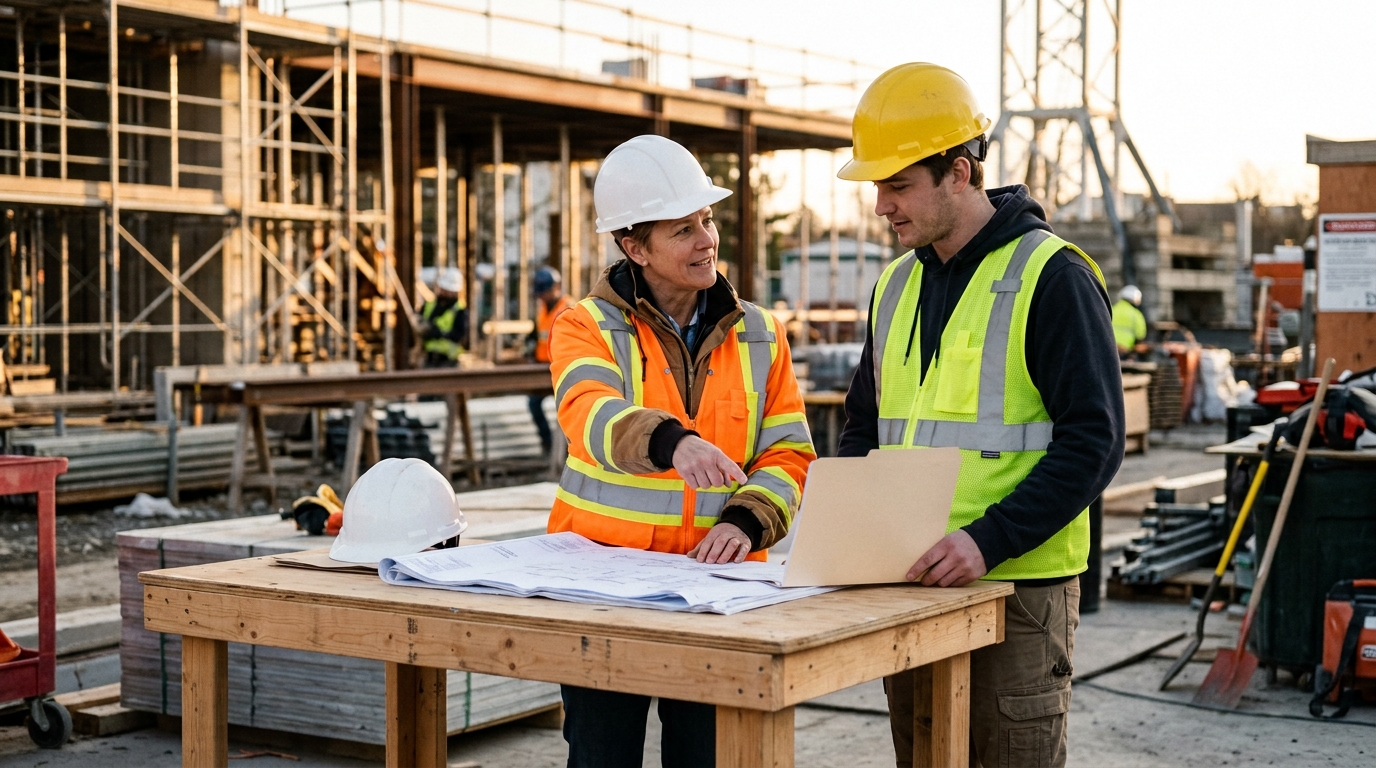
Duration is particularly important in construction claims. An office employee recovering from an injury may sometimes return with restrictions such as limited standing or lifting. A construction employee may not have the same flexibility if the essential duties involve climbing, lifting, carrying, operating equipment, kneeling, balancing, or working at height.
A physician may clear an injured employee for light duty while still restricting the employee from performing normal construction work. If the employer cannot provide suitable modified work, wage-replacement benefits may continue while the worker recovers, depending on applicable state rules.
Longer claims can therefore create costs on both sides: continued medical treatment and continued indemnity payments.
Good return-to-work programs can help when medically appropriate, but returning someone before the worker can safely perform assigned duties can create additional risk. Modified work should reflect actual medical restrictions rather than simply giving the employee a different title while expecting substantially the same physical work.
What Rising Construction Claim Costs Mean for Workers and Employers
A 13% industry-level medical-severity increase should not be used as a shortcut for determining the value of an individual workers’ compensation claim. Workers’ compensation systems are state-based, and benefits can vary depending on medical findings, wages, disability status, impairment, benefit limits, treatment rules, fee schedules, and return-to-work opportunities.
However, the trend highlights why construction injury claims need careful documentation. Serious construction injuries can evolve over time, especially when surgery, rehabilitation, or complications are involved.
Documentation, Prevention, and Early Claim Management Matter
An injured construction worker should report an injury promptly according to applicable workplace and state requirements. Important records may include accident reports, photographs, witness information, medical records, work-status reports, wage information, benefit notices, and communications about modified duties.
Workers should also provide employers with updated medical restrictions when their doctors change their work status. If a physician restricts lifting, climbing, prolonged standing, or other physical activities, written documentation can help establish why the worker cannot immediately perform normal construction duties.
Employers can approach the same issue from the prevention side. Fall protection, equipment inspection, training, hazard identification, protective equipment, and safe work procedures can reduce the likelihood of injuries in the first place.
Fewer Claims Do Not Eliminate the Need for Strong Safety Programs
The construction industry’s declining claim frequency is encouraging, but it should not lead to complacency. BLS reported 1,034 fatal workplace injuries in private-sector construction during 2024, the highest number among the major private-industry sectors it highlighted.
Falls remain particularly significant. Employers can reduce exposure by addressing guardrails, personal fall-arrest systems, ladders, scaffolds, roof work, floor openings, training, and jobsite supervision. Preventing one severe injury can have a much larger impact than reducing several minor claims because catastrophic injuries can generate substantial medical, disability, and operational costs.
Employers should also review how claims are handled after an injury. Prompt access to appropriate medical treatment, accurate wage reporting, communication with injured workers, and medically appropriate transitional work can help avoid unnecessary delays.
Workers should focus on following medical advice, attending required appointments, keeping documentation, and understanding notices received during the claim. Questions about settlements and benefit structure can be explored through our Settlement & Benefits Resources.
industry-level data
For industry-level data, readers can review the NCCI 2026 State of the Line Guide, which includes construction frequency, medical severity, and broader workers’ compensation loss-driver analysis.
The most important takeaway is that workers’ compensation costs are influenced by more than the number of reported injuries. Injury type, medical utilization, hospitalization, wages, disability duration, return-to-work possibilities, and state benefit rules can all influence how expensive a claim ultimately becomes.
Bottom line: construction workers’ compensation claims deserve particular attention in 2026. Construction claim frequency declined nearly 7% between Accident Years 2023 and 2024, but lost-time medical severity increased about 13%, the highest severity level among the industries analyzed by NCCI. More than half of the largest construction classes experienced double-digit medical-severity increases. The trend reinforces the value of injury prevention, appropriate medical treatment, accurate documentation, and effective return-to-work planning.
This article is for general informational purposes only and is not legal, medical, insurance, safety, or financial advice. Workers’ compensation laws, benefits, and claim procedures vary by state and individual circumstances.